

What Is Zod? Why Lovable Developers Should Keep It Updated
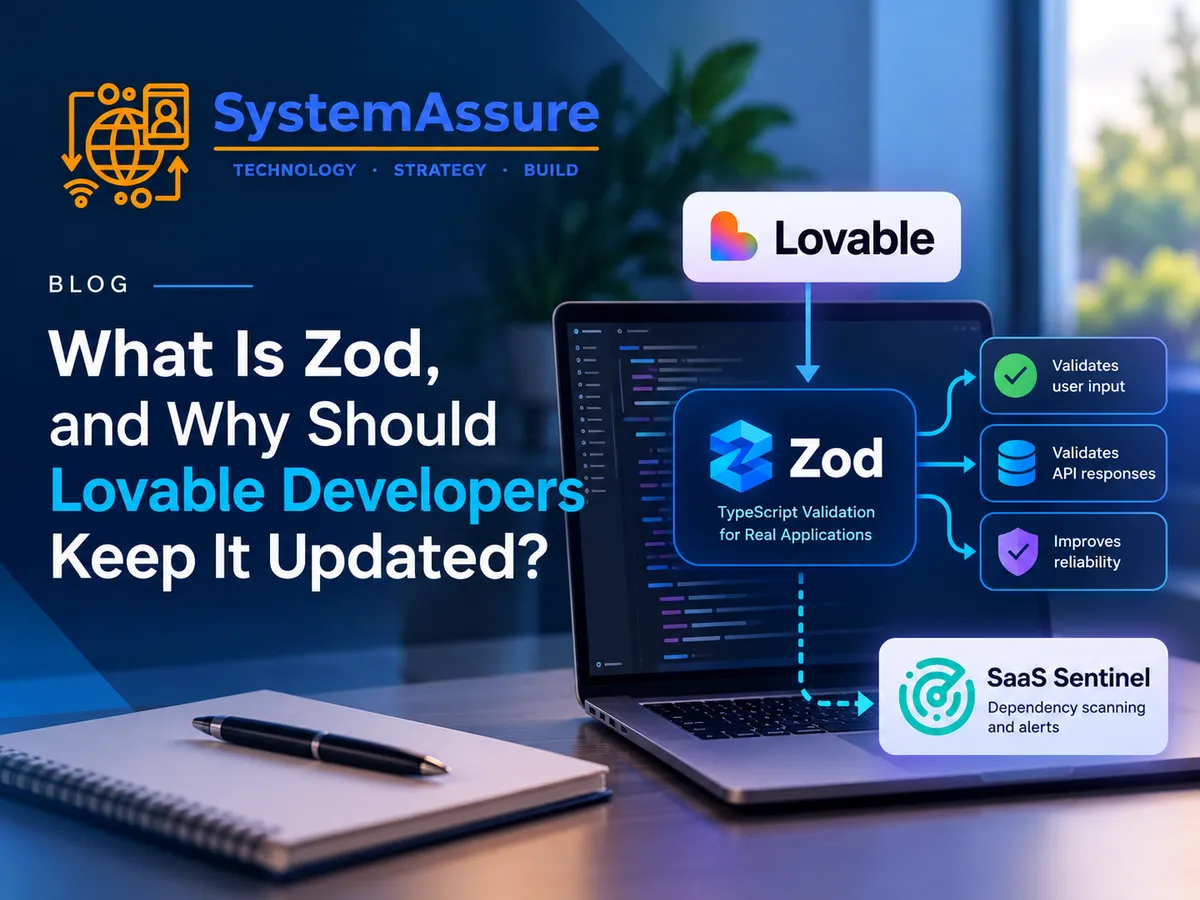
What Is Zod, and Why Should Lovable Developers Keep It Updated?
If you've built an application using Lovable, there's a good chance it uses Zod. But what does Zod actually do, and why should you care whether it's up to date?
Modern SaaS applications rely on numerous third-party software libraries. These provide functionality that developers would otherwise need to build themselves.
Zod is one of those libraries, and it plays an important role in application reliability and data validation.
What Is Zod?
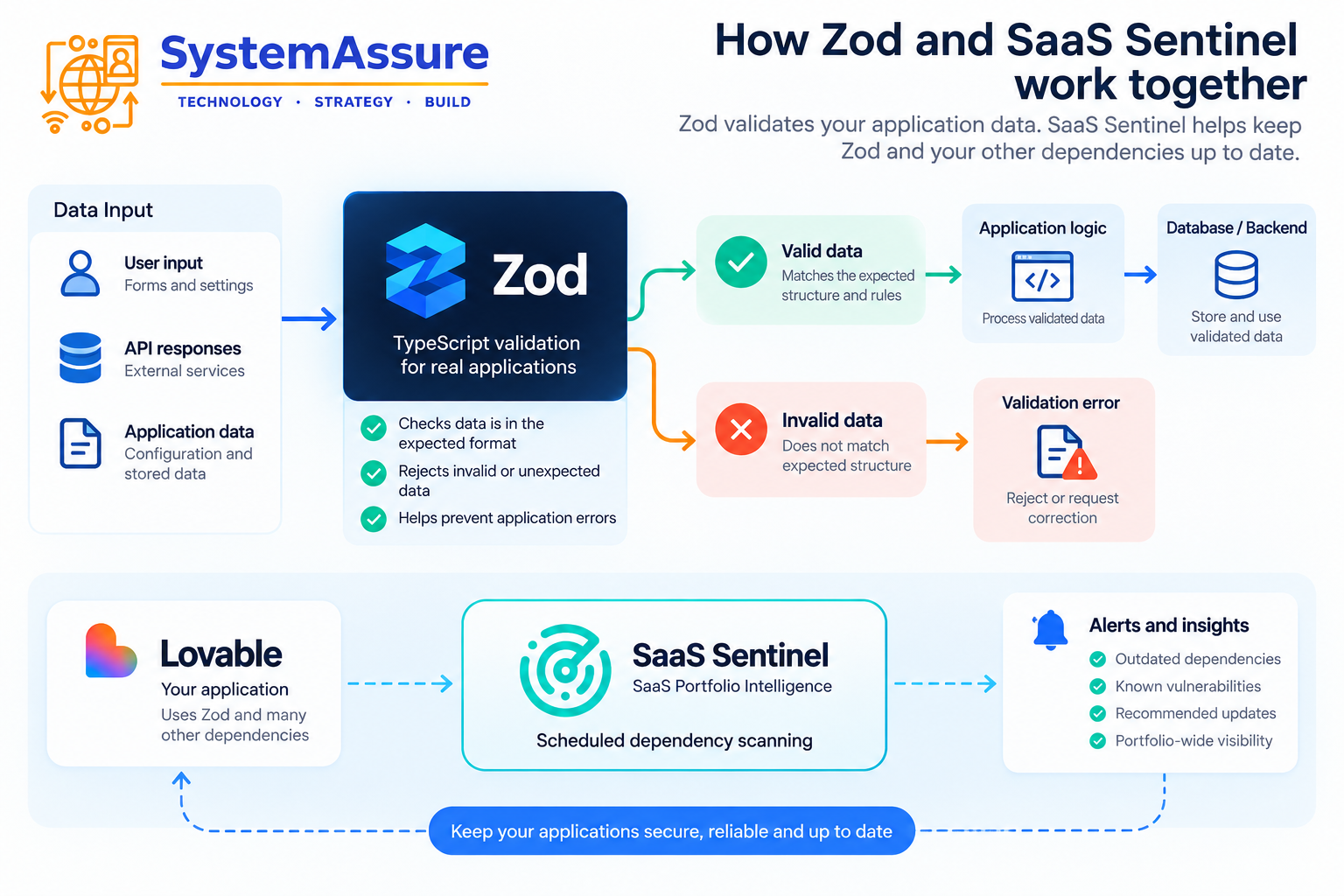
Zod is an open-source TypeScript validation library that checks whether information entering an application matches the expected format.
For example, imagine a customer registration form that requires:
A valid email address.
A name that isn't empty.
An age entered as a number.
Zod can validate this information before the application processes it.
It is also commonly used to validate information received from APIs, helping prevent unexpected or incorrectly formatted data from causing application errors.
In simple terms, Zod helps ensure your application receives the type of information it expects.
Why Does Zod Matter to Lovable Users?
Lovable makes it possible to build sophisticated applications without manually writing every line of code.
However, the applications it creates still depend on third-party libraries, including Zod.
You may never have deliberately installed Zod, but it could be used throughout your application for form validation, API integrations and data processing.
This creates an important distinction:
Lovable helps you build the application, but the software dependencies behind it still need maintaining.
Like any software library, Zod evolves over time. New releases can introduce:
Security fixes.
Bug fixes and reliability improvements.
Performance improvements.
Compatibility updates.
New functionality.
For example, Zod 4 introduced significant performance improvements over Zod 3, along with changes to its API.
However, upgrading between major versions can also introduce breaking changes, so updates should always be assessed and tested.
What Happens If You Don't Update Zod?
An outdated version of Zod doesn't automatically mean your application is insecure or unreliable.
However, continuing to use outdated dependencies can increase operational risk.
Over time, you may encounter compatibility problems, miss important bug fixes or continue using a version affected by a known security vulnerability.
The same applies to other dependencies within your application.
A typical Lovable application can contain dozens of direct dependencies and potentially hundreds of indirect dependencies.
Keeping track of all these libraries manually becomes increasingly difficult, particularly when you operate several SaaS applications.
How Do You Know If Zod Needs Updating?
You can check which version of Zod your application uses by examining its package.json file.
Alternatively, ask Lovable:
"Check which version of Zod this application uses, whether updates are available, and whether upgrading would introduce compatibility issues."
This works for an individual application, but it is a manual process.
You need to remember to perform the checks regularly, identify which updates matter and determine whether action is required.
And Zod is only one of many dependencies that need monitoring.
Automating Dependency Monitoring with SaaS Sentinel
This is one of the reasons we developed SaaS Sentinel, our SaaS Portfolio Intelligence platform.
SaaS Sentinel helps developers and SaaS operators maintain visibility across their applications, including the software dependencies they rely upon.
Rather than manually checking every application, SaaS Sentinel provides:
Scheduled dependency scanning – Automatically checks application dependencies at configured intervals.
Vulnerability identification – Helps identify dependencies affected by known security vulnerabilities.
Alerts when action is required – Notifies you when issues are detected that need attention.
Portfolio-wide visibility – Helps you monitor dependencies across multiple SaaS applications.
This is particularly valuable for developers using Lovable to build and operate several products.
Instead of relying on remembering to check each application's dependencies, you have a scheduled process that identifies potential issues.
SaaS Sentinel doesn't replace the need to assess and test updates. It helps ensure that important dependency issues aren't overlooked.
Keeping Your Lovable Application Healthy
Building an application is only the beginning.
Once it is running in production, you become responsible for maintaining the software behind it.
That includes monitoring dependencies such as Zod, identifying security vulnerabilities and ensuring that updates don't introduce unexpected problems.
The process doesn't need to be complicated:
Monitor your application's dependencies regularly.
Identify outdated or vulnerable libraries.
Assess the importance and compatibility of available updates.
Update and test before deploying changes.
Continue monitoring for new issues.
Tools such as SaaS Sentinel can automate much of the monitoring and alerting, allowing you to concentrate on developing your applications.
Conclusion
Zod is an important component in many Lovable applications, helping ensure that information is correctly validated before being processed.
Keeping it maintained is part of the wider responsibility of operating a reliable and secure SaaS application.
But Zod is only one dependency among many.
The real challenge isn't knowing that dependencies need updating. It's knowing when something needs your attention.
That's where automated monitoring becomes valuable.
SaaS Sentinel helps you stay informed about dependency issues across your SaaS portfolio, with scheduled scanning and alerts when action is required.
Learn more about SaaS Portfolio Intelligence at SaaS Sentinel.
Frequently Asked Questions